Places to visit
|
|
Blue Lagoon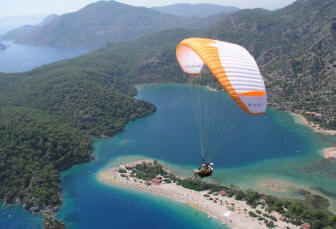 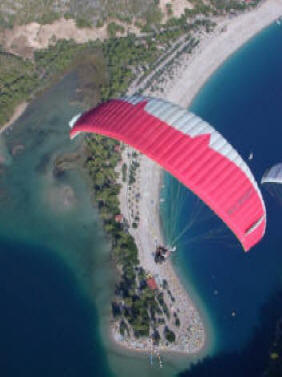 Olu Deniz, is arguably the most photographed beach in the world. Otherwise known as The Blue Lagoon because it is an area of outstanding beauty. It is a popular tourist destination and has numerous facilities such as restaurants, shops, bars and the beach has shower, toilet and changing areas. The beach is free but the lagoon charges a very small entrance fee, but it is worth a day out. The Blue Lagoon has calm, crystal clear waters which makes it ideal for a variety of water sports and a very safe place for children to swim. Part of the lagoon is now a protected area (and it's a national park). Saklikent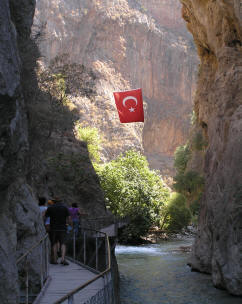 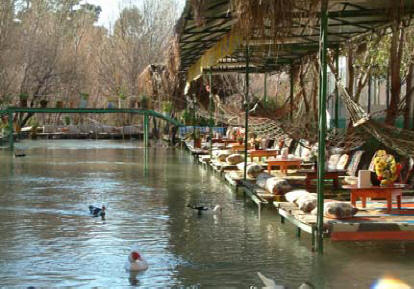
High in the mountains above Fethiye, rushing torrents of
icy cold water cut a narrow gorge through the mountains
over thousands of years, creating Saklikent Gorge.
This is just a
fantastic day out whether in the middle of the summer or
when the weather is cooler. On the hottest August
day you can wade through the icy cold waters in the
gorge. You can make it a leisurely stroll or for the
more adventurous walk and clamber over rocks and see how
far you can get. Its terrific fun. Then have
a lazy lunch at one of the restaurants with eating areas
on stilts above the gushing water, where they serve
delicious fresh trout and other local delicacies..
Then take a ride down the gorge on a giant rubber ring
reaching the mud baths at the bottom. On cooler days
Sakilkent is much quieter and the waters much higher
making the walk through the gorge very exciting.
A natural wonder, the resulting canyon is 300 metres deep and 18 kilometres long and offers visitors one of the most breathtaking excursions in all of Turkey. Saklikent Gorge has walls reaching a height of 300 metres and is navigateable for the first 18 kilometres. Saklikent in Turkish means "Hidden City".. The walls are so high that they cut out most of the sunlight and the fresh spring waters that flow through are freezing cold! For more information click here Butterfly Valley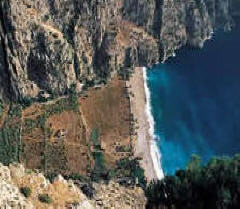 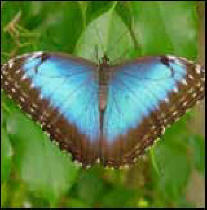 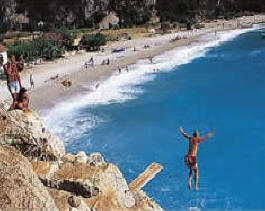 The Butterfly Valley near Fethiye is a hidden gem of Turkey's Turquoise Coast. Deep, steep and accessible only by boat or via the Lycian Way walking trail, it is a protected site because millions of butterflies - over 30 daytime species including the Jersey Tiger Moth and 40 nocturnal species - come here to breed between June and September. Construction is prohibited, so come by boat, bring a tent and camp overnight or stay in the tree-houses provided to appreciate this natural phenomena for yourself. In addition to the clouds of butterflies fluttering by, there are also two small waterfalls to discover, providing a refreshingly cool shower after a hike through the secret valley. Boats leave daily from Belcekiz Beach in Olu Deniz and the turquoise water of the little bay means swimming here is also delightful. There is a small restaurant in the valley where you can have lunch if you choose Kaya Village
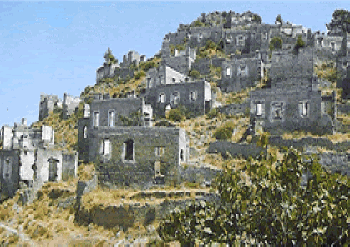
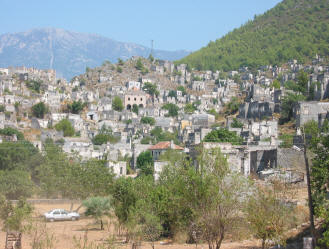
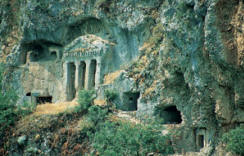
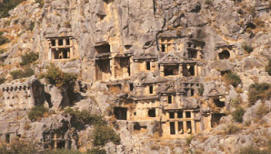
A few kilometres from Fethiye, climbing past the ancient fortress and rock tomb of King Amyntas, the pine trees give way to the bucolic landscape of the Kaya Village. Here a dwindling number of local families till the land and tend their animals. Some of the old Greek stone houses have been carefully restored to provide atmospheric and peaceful holiday homes. Visitors can walk, cycle or even horse-ride around the pathways and lanes of the valley, pausing at the simple teahouses, restaurants and general stores or continuing the few kilometres down to the Gemiler Beach. This is a fascinating
place to visit and can be combined with a lovely meal at one
of the many good restaurants in the area. Dalyan
|